The best rugs for vinyl plank floors are low-pile or flatweave styles in wool, cotton, or quality synthetic fibers, paired with a pad that is free of staining rubber and labeled safe for vinyl. Luxury vinyl plank (LVP) has a thin wear layer and usually floats rather than gluing down, so the rug and pad you choose protect the floor as much as they decorate it.
Why vinyl plank asks for its own rug rules
LVP is tough, water-resistant, and comfortable underfoot, which is why it turns up in living rooms, kitchens, and basements. Two things set it apart from solid wood or tile. Its top wear layer is thinner and more chemically reactive, and most planks are installed as a floating floor that is not fixed to the subfloor. Pick a rug that grips too aggressively, or a pad that bonds to the surface, and you can work against the planks' natural movement. Pick the wrong backing and you can leave a mark that sits inside the wear layer, where no cleaning reaches it. That is why the best rugs for vinyl plank floors are judged first on construction and backing, then on looks.
The materials that work best on LVP
When shoppers compare the best rugs for vinyl plank floors, fiber is usually the first question, and low-pile and flatweave rugs are the sweet spot. They lie flat, resist tripping, vacuum quickly, and trap less of the fine grit that can scratch a wear layer over time. Wool is soft, naturally resilient, and a dependable all-rounder. Cotton flatweaves are light and simple to lift. Capable synthetics such as polypropylene are stain-resistant and friendly on the wallet, which suits busy rooms. A loom-made polypropylene piece like the Aarav Abstract brown indoor rug gives you a modern look in a low-maintenance fiber, while the cream-and-grey Aarya Geometric indoor rug and runner warms up the cooler gray tones so common in LVP. Whatever the fiber, keep the pile modest and the backing vinyl-friendly.

The backing problem: what actually stains vinyl
This is the one thing to settle before anything else. Plenty of inexpensive rugs and pads use latex, natural rubber, or PVC backings, and the plasticizers in a vinyl wear layer can react with compounds in those materials, leaving a permanent amber or yellow stain. Some coated backings also trap moisture against the plank. Once that discoloration sets, it is in the wear layer rather than on top of it, so scrubbing will not lift it. The remedy is straightforward: keep solid rubber and unlabeled latex off your LVP, and place a pad described as safe for vinyl between any rubber-backed rug and the floor. Our explainer on why you need a rug pad covers the pad types in more depth.
Choosing a vinyl-safe rug pad
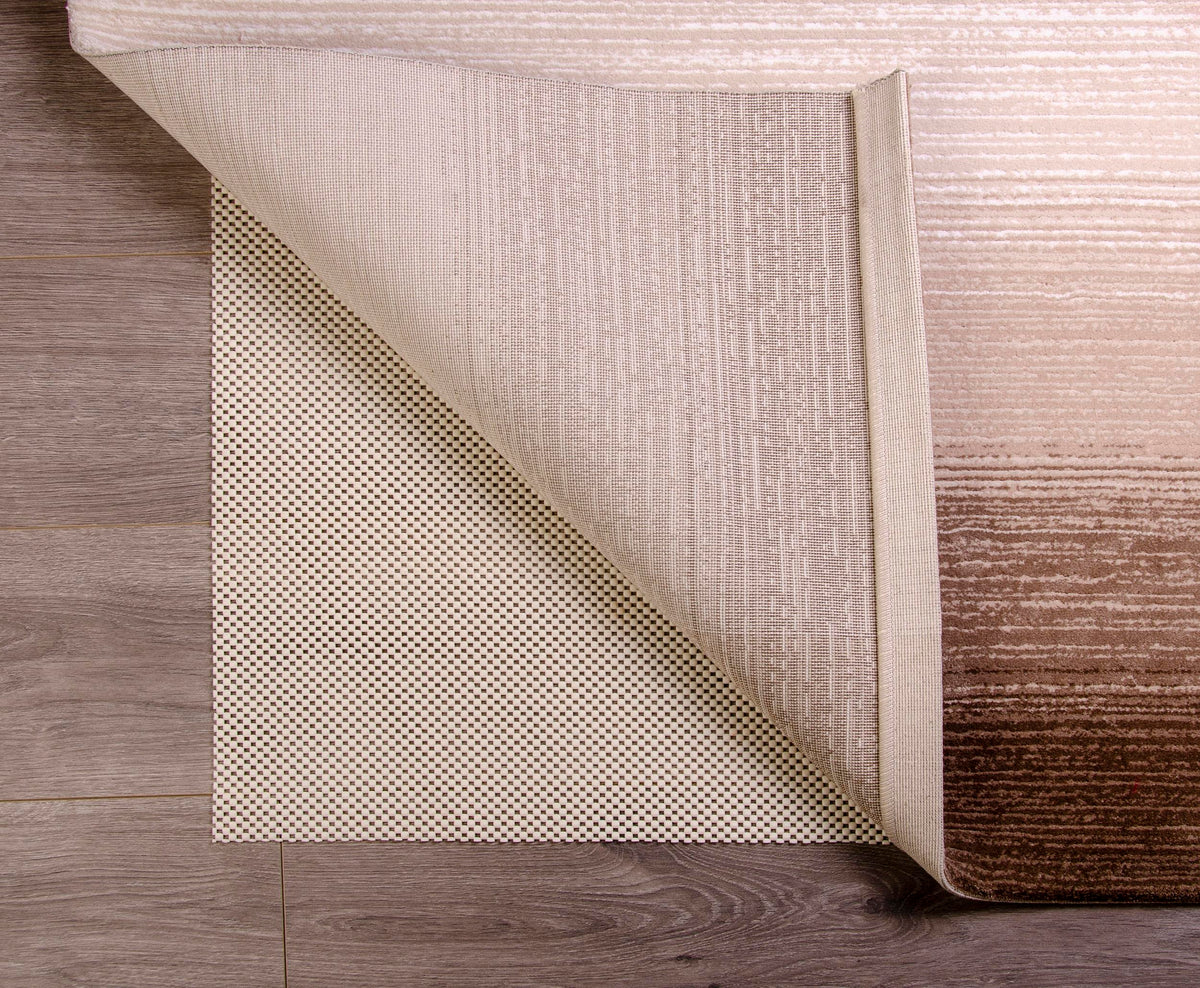
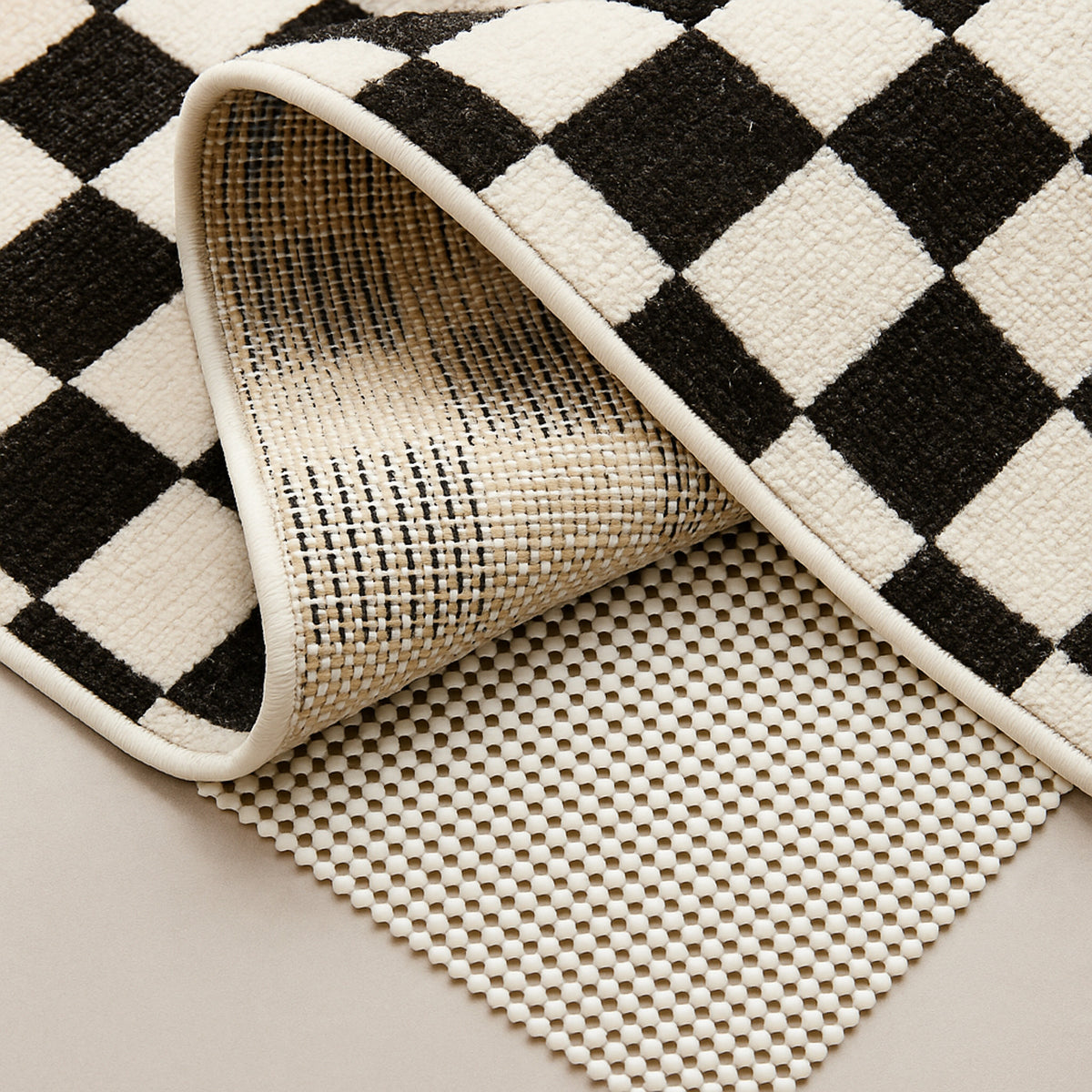
On vinyl plank a pad does three jobs: it stops a rug from sliding across a slick floating floor, it cushions each step, and it shields the wear layer. The deciding factor is chemistry, not grip alone. The table below lines up the common options so you can match a pad to your room.
| Pad type | Grip | Safe on LVP? | Best for |
|---|---|---|---|
| Felt plus natural rubber | Strong | Yes | Living rooms, larger rugs |
| PVC-free non-slip mesh | Moderate | Yes | Low-pile, thin rugs |
| EVA foam, fabric-backed | Moderate | Yes | Bedrooms, extra cushion |
| Solid rubber backing | Very strong | Risky, can stain | Avoid on LVP |
| Unlabeled latex coating | Varies | Risky, can stain | Avoid on LVP |
| Adhesive or sticky mats | Strong | No, fights a floating floor | Avoid on LVP |
Size the pad about an inch in from each edge so it stays hidden. A grippy option such as the Premium Non-Slip Rug Pad or the firmer Supreme Non-Slip Rug Pad keeps a rug anchored without locking the planks down, and both are made for use on hard floors.

Room by room: kitchens, basements, living rooms
Vinyl plank tends to land in exactly the rooms where rugs earn their keep. In kitchens and entryways, reach for low-pile styles and runners that shrug off crumbs and wet shoes. In basements, where LVP is popular for its water resistance, lean toward synthetic, low-pile rugs rather than thick natural fibers that can hold damp. In living rooms you have more room to play: a plush wool piece over a vinyl-safe pad adds warmth and softens the echo of a hard floating floor. If comfort underfoot is your main goal, our notes on rugs that warm up cold hard floors carry over neatly to LVP.
Sizes and styles that flatter plank flooring
Plank has a strong linear grain, and the right size frames it instead of fighting it. In a living room a 5x7 rug anchors a seating zone with the front legs of the sofa on the rug, while an 8x11 rug lets every furniture leg sit on top for a pulled-together look. Style-wise, geometric and modern patterns echo the clean lines of the boards, while earthy tones soften cooler gray planks. Browse all rugs to compare looks, and keep the pile and backing rules in mind as you shop.
Keeping rug and floor healthy together
A little routine keeps both in good shape. Every few weeks, lift the rug and check the plank beneath for trapped grit or moisture, the two things most likely to mark a wear layer over time. A quick vacuum of the bare floor and the back of the rug clears grit before it grinds in, and letting the spot breathe keeps damp from lingering. Because LVP floats, skip adhesive strips that can bind to the surface; a quality non-slip pad holds the rug and still lifts easily for cleaning. Rotate the rug a couple of times a year so sun and footsteps wear it evenly. Treat the rug and the plank as a pair, and the best rugs for vinyl plank floors stay comfortable and good-looking for years.
Frequently Asked Questions
Can an area rug damage vinyl plank flooring?
The rug itself will not, but the wrong backing can. Solid rubber, unlabeled latex, and some PVC coatings carry compounds that react with vinyl and leave a permanent amber or yellow mark in the wear layer. Pick a pad labeled safe for vinyl or LVP, usually felt-and-natural-rubber or PVC-free, and almost any rug becomes safe to use.
What rug material is best for vinyl plank floors?
Low-pile and flatweave rugs lead the field because they lie flat, resist tripping, and vacuum easily. Low-pile synthetics like polypropylene suit kitchens and basements, while wool brings warmth to a living room when it sits on a vinyl-safe pad. Match the pile height to how much traffic and moisture the room sees.
Do I really need a rug pad on LVP?
Yes. Because vinyl plank usually floats, a non-slip pad stops the rug from creeping and bunching as the boards shift. It also cushions steps and guards the wear layer, as long as the pad chemistry is vinyl-friendly rather than a staining rubber.
Will a rubber-backed rug mark my LVP?
It can. Solid rubber and some latex backings may react with vinyl and leave discoloration that sits inside the wear layer. If a rug has a rubberized back, slide a vinyl-safe pad underneath it as a barrier, or choose a rug without a coated backing and add a compatible pad instead.
Can I put a rug on vinyl plank in a basement?
Absolutely, and it is a good way to warm a hard basement floor. Because basements can be humid, pick synthetic, low-pile styles over thick natural fibers that hold moisture, pair them with a breathable vinyl-safe pad, and vacuum often so grit and damp never settle into the pile.