The best rugs for tile floors are low-pile synthetic or indoor-outdoor styles anchored by a non-slip pad, because tile is hard, cold, and slick and needs a rug that grips, cushions, and shrugs off moisture. Match the fiber to the room, scale the rug to the furniture rather than the grout, and never skip the pad on polished tile.
Whether you are covering kitchen tile, a chilly bathroom, a tiled entryway, or an open living area, the best rugs for tile floors share three traits: a secure grip, a moisture-tolerant fiber, and a size that suits the room's traffic. Get those right and the rug will look good and behave for years.
Why tile floors need a different kind of rug
Tile has three qualities that shape every good rug choice. It is slick, so glazed porcelain and ceramic give a rug almost no friction, and a rug without grip becomes a skating hazard in socks. It is hard and cold, which is the reason you want a rug, but it also means a thin, cheap rug feels like paper over concrete. And tile usually lives in wet rooms, where splashes and tracked-in rain are routine. Recessed grout lines add a fourth wrinkle: a stiff, heavily backed rug can bridge unevenly and lift at the edges, so a flexible, low-profile rug lies flatter.
What makes a rug work on tile
Before you pick a colour or pattern, screen every candidate against these practical must-haves:
- Grip — a separate gripping pad, or at least a non-slip backing. On slick tile this is non-negotiable.
- Low to medium pile — flatter rugs sit stable on tile and shed grit instead of grinding it against the hard floor.
- Moisture tolerance — synthetics and treated fibres handle kitchen and bath humidity far better than untreated wool or silk.
- Body with flexibility — enough cushion to feel good underfoot, flexible enough to lie flat over grout.
- Easy care — tiled rooms are the messy ones, so a wipe-clean or spot-cleanable fibre earns its keep.
Best materials for tile floors
Material is the single biggest decision, because it drives moisture tolerance, cleaning, and how the rug feels on an unforgiving surface. The table below compares the common choices for tile.
| Material | Moisture tolerance | Comfort on tile | Care | Best tiled room |
|---|---|---|---|---|
| Polypropylene | Excellent | Good | Wipe or rinse | Kitchen, entryway |
| Indoor-outdoor (PET) | Excellent | Medium | Hose off | Bath, mudroom |
| Cotton blend | Very good | Good | Easy to clean | Bathroom, kitchen |
| Jute / natural fibre | Low (avoid if wet) | Firm, textured | Spot clean | Dry living areas |
| Wool | Moderate | Excellent, warm | Professional | Dry living, dining |
For kitchens and bathrooms, a durable synthetic or an indoor-outdoor style is the smart default, because both shrug off splashes and clean easily. For a dry, tiled living or dining room where warmth matters most, wool delivers comfort on a cold floor, while a loom-made traditional piece such as the Jinan Tile Medallion rug, woven in Turkey, suits the look of a tiled room without fighting the floor. Natural fibres like jute add texture but should stay well away from standing water.

Room by room: matching the rug to the space
Tiled rooms rarely ask for the same rug twice.
Kitchen. Choose a low-pile runner for the spot in front of the sink and stove where spills and standing are constant; a pattern hides crumbs and drips between cleanings.
Bathroom. Skip the thin novelty mat and use a firm, quick-drying rug with a reliable grip — it dries faster than plush and looks like a real rug.
Entryway and mudroom. Durability wins. A polypropylene or PET rug handles grit, road salt, and wet boots, then rinses clean outside.
Living and dining rooms. Comfort leads. A wool or plush low-pile rug warms the space, and a proper pad stops it creeping across the tile.
The non-slip pad is non-negotiable on tile
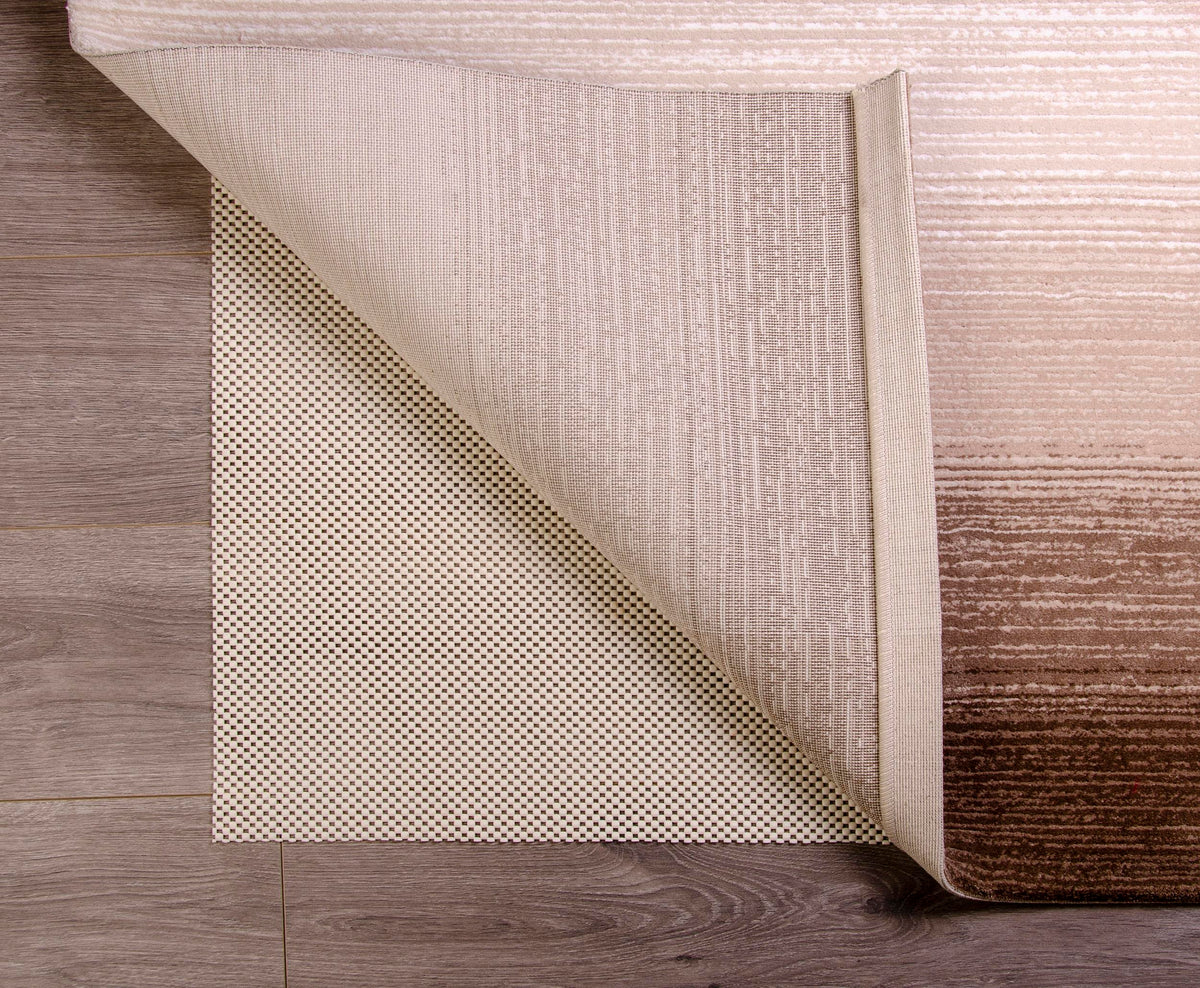
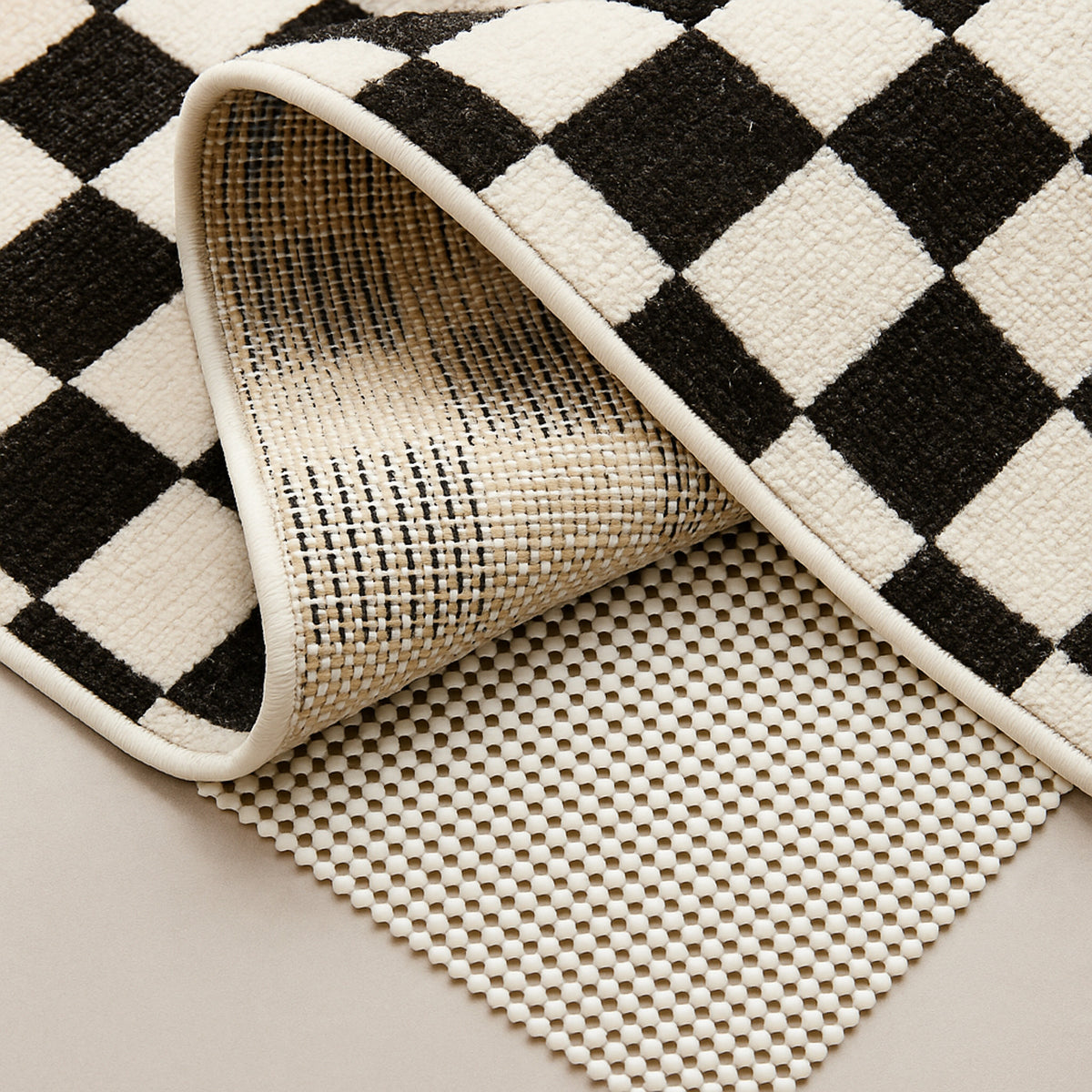
If you take one thing from this guide, make it this: on tile, a gripping pad is not optional. Polished porcelain gives a rug almost nothing to hold, so even a heavy rug slides and rucks under foot traffic. A quality pad adds grip, a cushion against the hard floor, and airflow that helps the rug dry after a splash. Choose a pad rated for hard floors, because the wrong adhesive backing can leave residue or discolour some tile finishes over time. A felt-and-rubber build gives the best mix of cushion and grip; the Premium Non-Slip Rug Pad and Supreme Non-Slip Rug Pad are both sized for hard floors, and our guide to rug pads covers the details.

Colour and pattern for tiled rooms
Tile comes with its own colour story, so the rug should work with the grout and the tile rather than fight them. Busy, patterned tile — encaustic, mosaic, or bold geometric — calms down under a simpler rug in one dominant tone. Plain, large-format tile in white, grey, or beige is a blank canvas for a rug with real personality. Pattern also earns its place practically: a mid-tone or multi-coloured design hides crumbs and water spots far better than a pale solid on a floor that already sees heavy use. If your tile runs cool, a warm-toned rug balances the room; if it runs warm, a cooler rug keeps the space from feeling one-note. When in doubt, pull one shade from the tile or grout into the rug so the two read as a deliberate pair.
Sizing your rug for a tiled room
Size is where tiled rooms trip people up, because the grid tempts you to match the rug to the tile pattern rather than the furniture. Ignore the grout and size to the space. In a tiled living room, a larger rug lets the front legs of the seating sit on it; a compact layout suits a 5x7 rug, while an open plan wants an 8x11 rug or bigger. In a kitchen, a runner should span the working zone with a few inches to spare at each end. Leave a consistent border of exposed tile around the rug so the room still reads as intentional. For placement by room, see our rug sizing guide.
Cleaning and maintenance on tile
Tiled rooms get dirty, so plan for it. Shake or vacuum the rug weekly to lift the grit that would otherwise grind between rug and tile. Lift the rug now and then and mop the tile underneath, where dust and moisture collect and can leave a shadow. Blot spills right away rather than letting them sit in the grout lines, and air-dry any rug fully before it goes back down, since a damp rug on tile invites mildew. With an easy-care rug and a good pad, upkeep on tile is genuinely low-effort.
Frequently Asked Questions
What are the best rugs for tile floors in a kitchen?
A low-pile, easy-clean synthetic runner is the best all-rounder for kitchen tile. It cushions the spot in front of the sink and stove, hides crumbs with a pattern, and wipes or rinses clean after a spill. Pair it with a non-slip pad rated for hard floors so it grips the slick tile and stays put through daily traffic.
How do I stop a rug from sliding on tile?
Use a gripping rug pad made for hard floors — it is the single most effective fix. Polished tile offers almost no friction, so even a heavy rug slides without one. Avoid cheap adhesive-backed pads that can leave residue, and choose a felt-and-rubber pad, which adds both grip and cushion.
Can I put a wool rug on tile?
Yes, in a dry room. Wool is the most comfortable, warming fibre for cold tile in a living or dining area and resists everyday soiling well. Keep it away from wet zones such as bathrooms and the spot right at a kitchen sink, where trapped moisture can lead to mildew, and always use a pad underneath.
Are jute or natural-fibre rugs good for tile floors?
Jute adds lovely texture on a dry tiled floor like a living room or hallway, but it is a poor choice anywhere it might get wet. Natural fibres absorb moisture and can mildew or stain, so avoid them in bathrooms, rain-prone entryways, and directly at a kitchen sink. Reach for a synthetic there instead.
Do I still need a pad if my rug has a non-slip backing?
On tile, a separate pad is still worth it. Built-in backings help but wear down and add little cushion against a hard, cold floor. A dedicated pad adds comfort underfoot, extends the rug's life by reducing crushing, and grips slick tile far more reliably than a thin factory backing alone.
Final thoughts
The best rugs for tile floors come down to three decisions: a moisture-appropriate material, a real non-slip pad, and a size scaled to the furniture rather than the grout. Reach for easy-care synthetics and indoor-outdoor styles in wet rooms, save wool and jute for dry living spaces, and never skip the pad on slick tile. Get those right and your rug adds warmth, quiet, and grip to the hardest floor in the house. Browse the full rug collection to start.