The best rugs for cork floors are moderate-weight, low-pile pieces in breathable fibers, laid over a non-slip pad that grips without sealing the surface, because cork is soft, cushioned, and sensitive to trapped moisture and strong sun, so a lighter breathable rug protects it far better than a thick, dense one. Below is how to match materials, pads, sizing, color, and everyday care to cork's particular quirks.
Why cork asks for a different rug than other floors
Cork is loved for the way it feels: springy, insulating, and quiet under bare feet. That same give is why the rug on top matters so much. Cork compresses, so a heavy piece or a hard, gritty backing can press in permanent dimples, and a stiff rug edge can score a crease over time. The sealed finish can also react with certain backings and cloud or discolor.
Two more traits set cork apart from wood or tile. It dislikes standing moisture, and it shifts tone under ultraviolet light. A rug that seals damp against the surface can lift or mark the finish, and a rug that shades only part of a sunny room leaves an uneven line once you move it. That is the whole logic behind the best rugs for cork floors being lighter and breathable rather than the thickest option on the rack.
What to look for in the best rugs for cork floors
The best rugs for cork floors are middling in weight, pliable enough to settle flat without digging an edge into the surface, and easy to lift for cleaning. Low to medium pile suits cork because it brings texture without the bulk that concentrates pressure in one spot. Natural fibers such as wool breathe well and shrug off static, while a tightly woven synthetic resists fading in bright rooms. Flatweave jute brings an organic look but belongs in dry zones only. The table below sums up how the common choices behave on cork.
| Material | How it does on cork | Watch out for | Best room |
|---|---|---|---|
| Wool, low pile | Breathable and resilient, springs back | Costs more | Living room, bedroom |
| Polypropylene | Durable and fade-resistant, sheds spills | Less plush than wool | Family room, hallway |
| Hand-tufted | Holds color, adds soft texture | Keep moisture off the backing | Living room, dining |
| Jute / natural fiber | Light and organic | Poor in damp spots | Dry, low-traffic rooms |
| Thick shag / dense tufted | Risky, concentrates weight and traps air | Denting and moisture | Use with real caution |
Getting the footprint right is half the battle on a floor that shows fade lines, so our guide to the right rug size for each room pairs well with this one.
Choosing a rug pad that protects cork
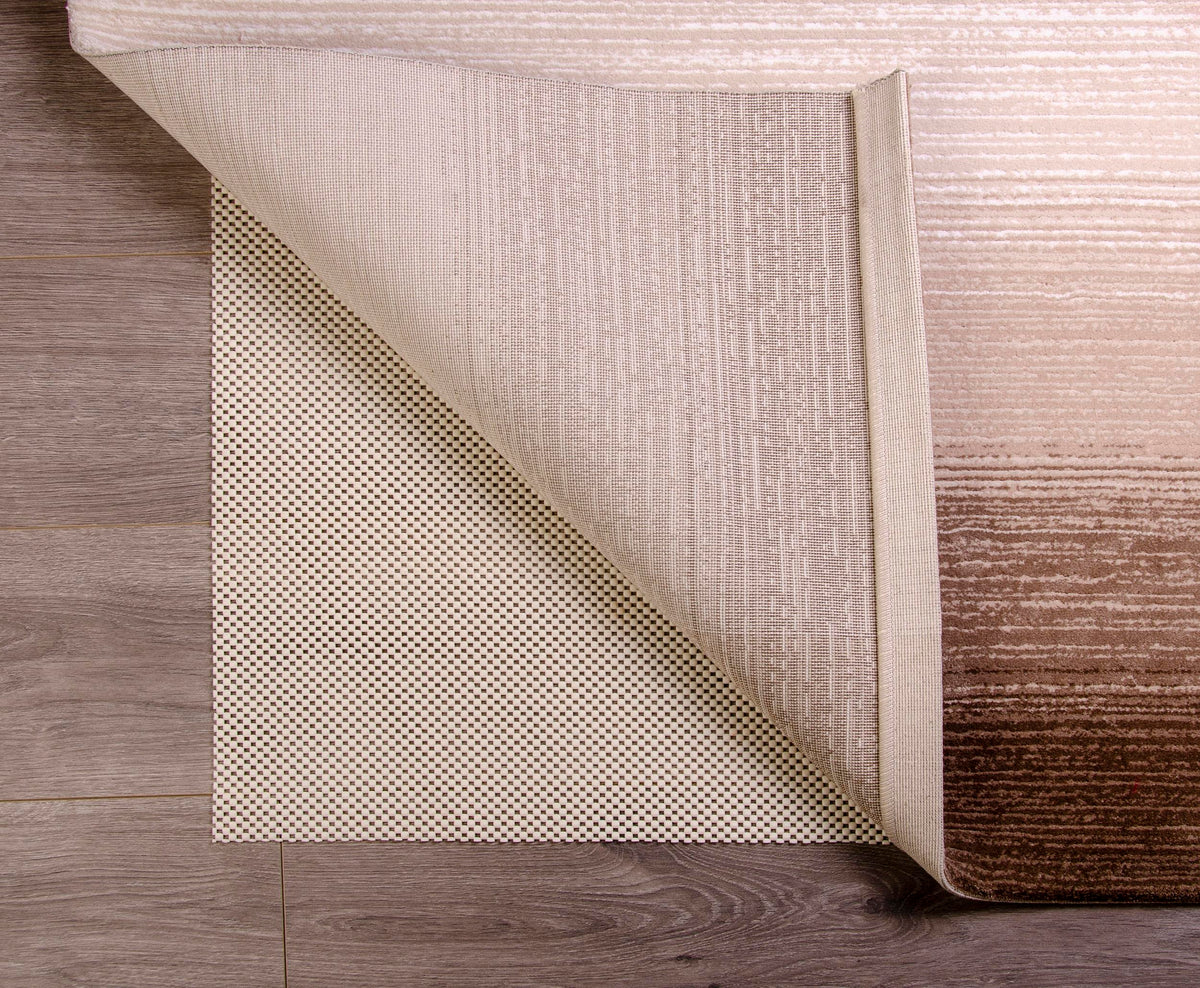
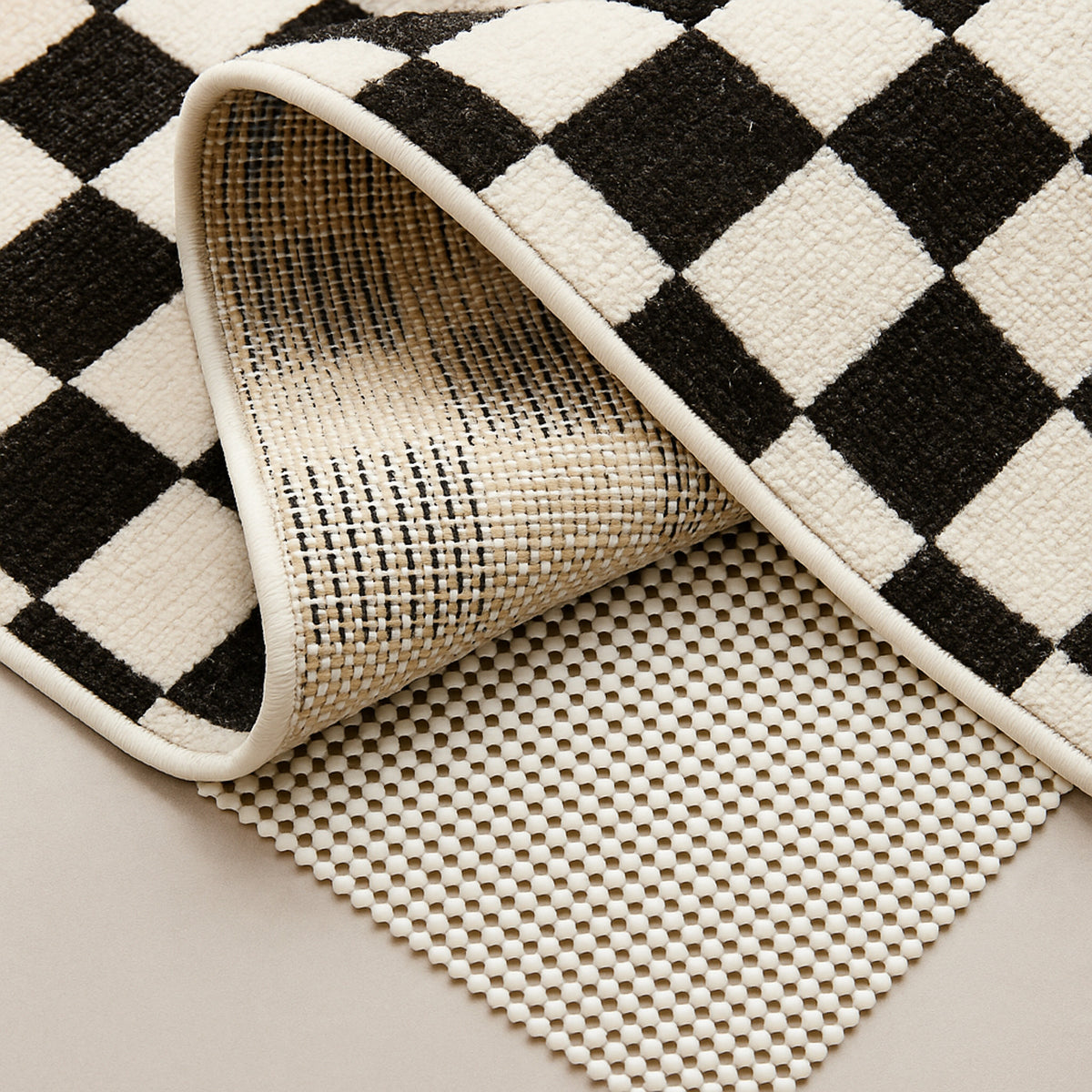
On a cork floor the pad does as much work as the rug. Steer clear of solid vinyl or cheap adhesive-backed layers: they can seal moisture against the surface and, in some cases, mark the finish. A breathable pad that grips without forming an airtight skin is the goal, so the floor beneath can still release any trapped damp. A non-slip option such as the Premium Non-Slip Rug Pad keeps the rug from creeping while spreading its weight more evenly, which lowers the chance of dents where furniture legs land.

Because cork is already cushioned underfoot, you do not need the deepest pad on the shelf. A slim, grippy layer is plenty, and it also stops the grit and sliding that slowly wear a soft floor.
Sizing and placing a rug on cork
Sizing the best rugs for cork floors follows the usual room logic with one cork twist: sunlight. Since cork changes color in the sun, size a rug so it either shades most of a bright area or sits clear of the direct-sun path — a small rug stranded in a sunbeam is exactly what bakes in a visible line later. In a seating area, draw the front legs of the sofa and chairs onto the rug; at a dining table, scale up so the chairs stay on when pushed back. A 5x7 rug anchors a compact room, while an 8x11 rug suits an open living space. Rotate the rug a couple of times a year so it and the cork beneath weather at the same pace.
Room by room: where a rug earns its keep on cork
Cork turns up in different rooms for different reasons, and the best rugs for cork floors shift with each. In a living room, cork already feels cozy, so lean into a soft wool or plush low-pile piece that frames the seating, keeping heavy furniture off the very edges to avoid denting. In a kitchen, spills and grit lead, so a hard-wearing, easy-to-lift rug by the sink and a slim runner along the busy lane keep mess off the floor. In a home office, pick a low, firm weave a rolling chair glides over rather than deep pile the casters would crush. In a bedroom, where moisture is rarely an issue, a slightly plusher rug can shine at the bedside.
Color and style for cork's warm tone
Cork has a honeyed, golden-brown base, so the best rugs for cork floors either lean into that warmth or set a deliberate cool contrast. Earthy neutrals blend in for a calm, organic feel — a piece like the Aila Linear Beige and Cream rug settles quietly against golden cork. If you would rather the rug stand apart, cool tones do the lifting: the Aeris Distressed Grey rug keeps a room feeling fresh instead of uniformly amber. Where sun is strong, favor a fade-resistant build such as the hand-tufted Aegis Trellis Beige and Black rug, which holds its tone in bright light.

Care, moisture, and daily habits
Moisture is the one rule you cannot bend on cork. Blot spills the moment they land, never leave a wet rug lying on the surface, and let any rug you wash dry fully before it goes back down. Vacuum on a regular rhythm so grit never works between rug and floor, where it can scratch the finish. Lift and air the rug from time to time and glance at the cork beneath for early signs of trapped damp; our walkthrough on cleaning an area rug the right way covers the method in full.
Humidity swings matter too. Cork expands and contracts a little as a room gets damper or drier across the seasons, so a rug that lies flat in summer may sit over subtly different cork by winter. Keeping indoor humidity reasonably steady helps the floor stay even, and a breathable pad lets that movement happen without sealing air against the surface. If a corner starts to curl, flatten it promptly rather than letting it press an edge into the softened cork below.
Mistakes to avoid on cork floors
The common slip-ups are easy to name. A heavy shag or dense tufted rug with furniture parked on top drives weight into one spot and dents the cork. A solid rubber or vinyl pad traps damp and can mark the finish. A small rug marooned in a sunny patch burns an uneven line into the floor. And skipping the pad entirely lets the rug slide, wrinkle, and grind grit into the surface. Sidestep those four and you have solved most of what goes wrong.
Frequently Asked Questions
Which rugs work best on a cork floor?
Moderate-weight, low to medium pile rugs in breathable fibers are the safest pick — wool, a tightly woven synthetic, or a durable polypropylene — all set over a breathable non-slip pad. Give very heavy shag and dense tufted rugs a miss because they dent soft cork, and keep natural-fiber jute out of damp rooms. In sunlit spaces, a fade-resistant construction keeps the color honest.
Is a rug pad safe to use on cork?
Yes, and it is worth using — just choose the pad with care. Reach for a breathable non-slip pad rather than solid vinyl or adhesive-backed types, which can seal moisture in and react with cork's finish. The right pad grips the rug, spreads its weight to cut down on denting, and lets the floor underneath breathe.
Can a rug actually damage a cork floor?
It can if the choice is poor. Heavy rugs with furniture on them press dents into soft cork, airtight backings trap damp and cause marks, and grit caught underneath scratches the finish. Go with a moderate-weight rug, a breathable pad, and regular vacuuming, and the rug will shield the cork rather than harm it.
Do cork floors fade where a rug sits?
Cork reacts to sunlight, so a rug that shades only part of a bright floor can leave a visible line once it is moved. Either size the rug to cover most of the sunlit area, keep it clear of the direct-sun path, or rotate it a few times a year so the exposed cork tones evenly.
Bringing it together
Cork rewards a thoughtful rug. Keep the piece moderate in weight and low to medium in pile, set it on a breathable non-slip pad, size it to manage the sun, and stay disciplined about moisture, and both rug and floor will last for years. When you are ready to shop for the best rugs for cork floors, start with breathable, fade-resistant picks in the full rug collection and choose a size and tone that flatter the warm, golden character of your cork.